
Category: Technical SEO
Technical SEO Field Reference: interview questions answered from documentation, observation, and interpretation.
-
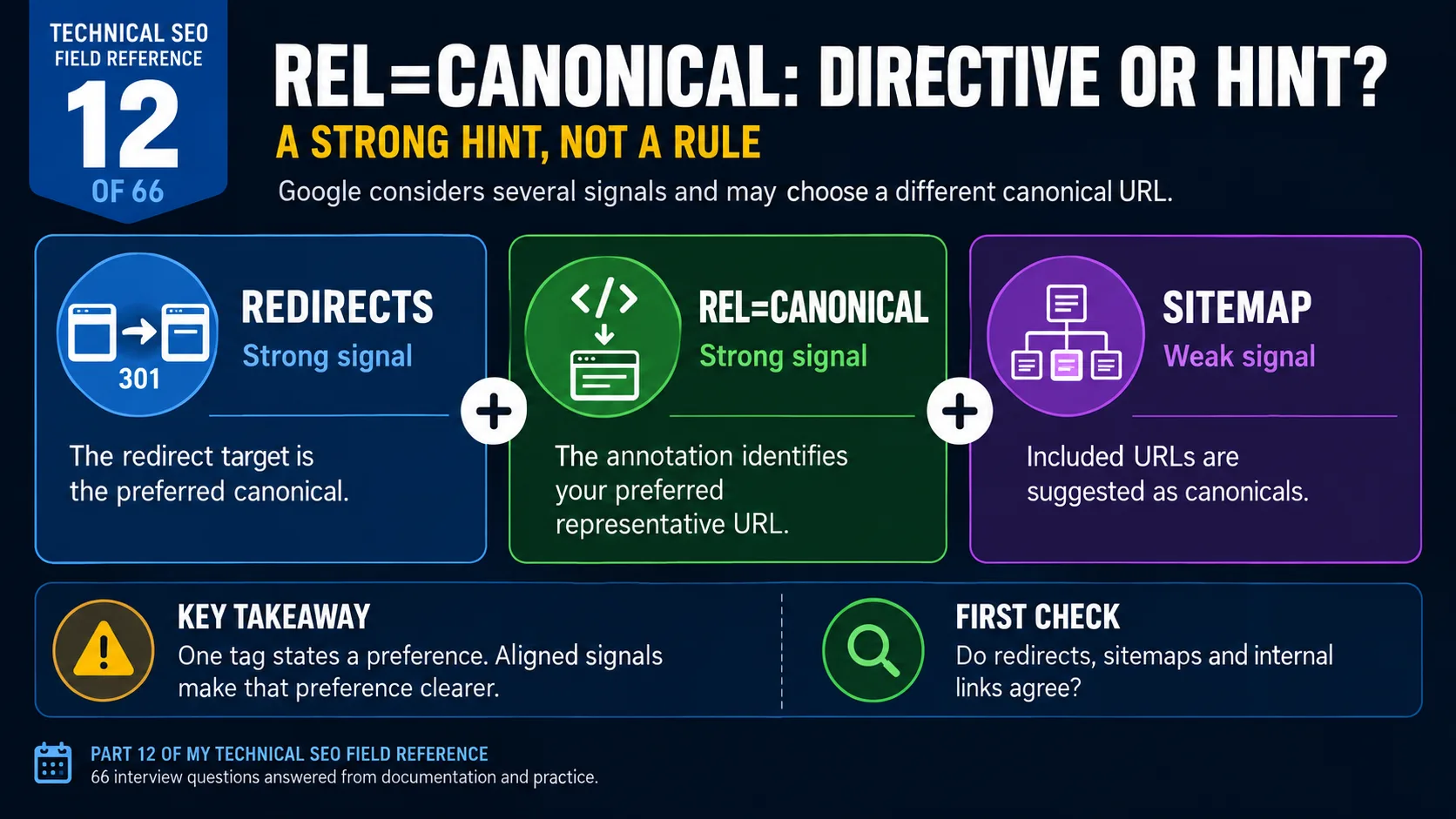
Canonical Hint or Directive: What Google Actually Says
Read more →: Canonical Hint or Directive: What Google Actually SaysRel canonical is a canonical hint, not a directive. Google considers it alongside redirects and sitemaps, and may choose a different canonical URL when signals conflict.
-
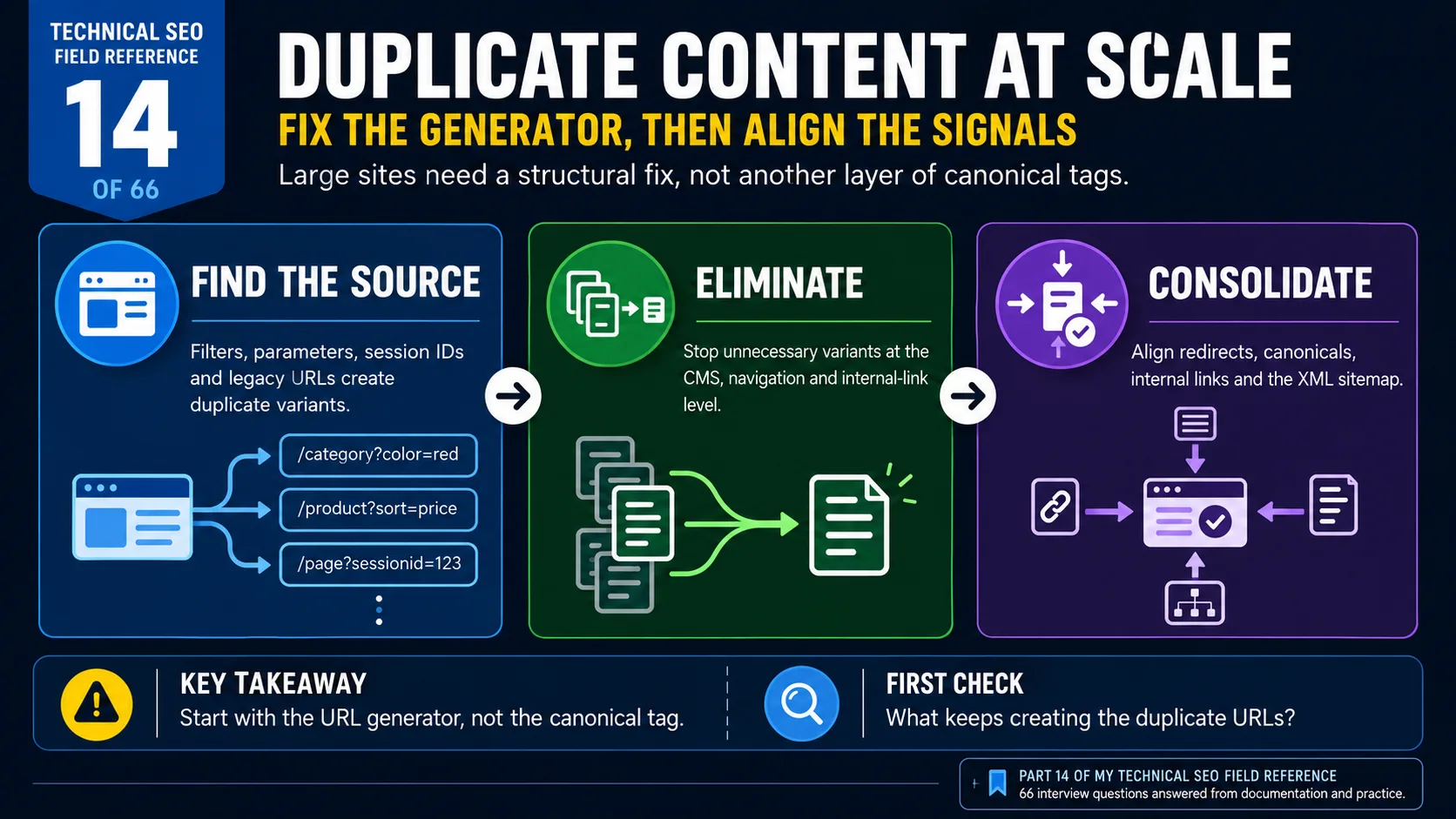
Duplicate Content on Large Websites: How to Handle It
Read more →: Duplicate Content on Large Websites: How to Handle ItLarge sites should fix duplicate content at the source, then align redirects, canonicals, internal links and sitemaps on one preferred URL. Canonical tags alone do not scale.
-
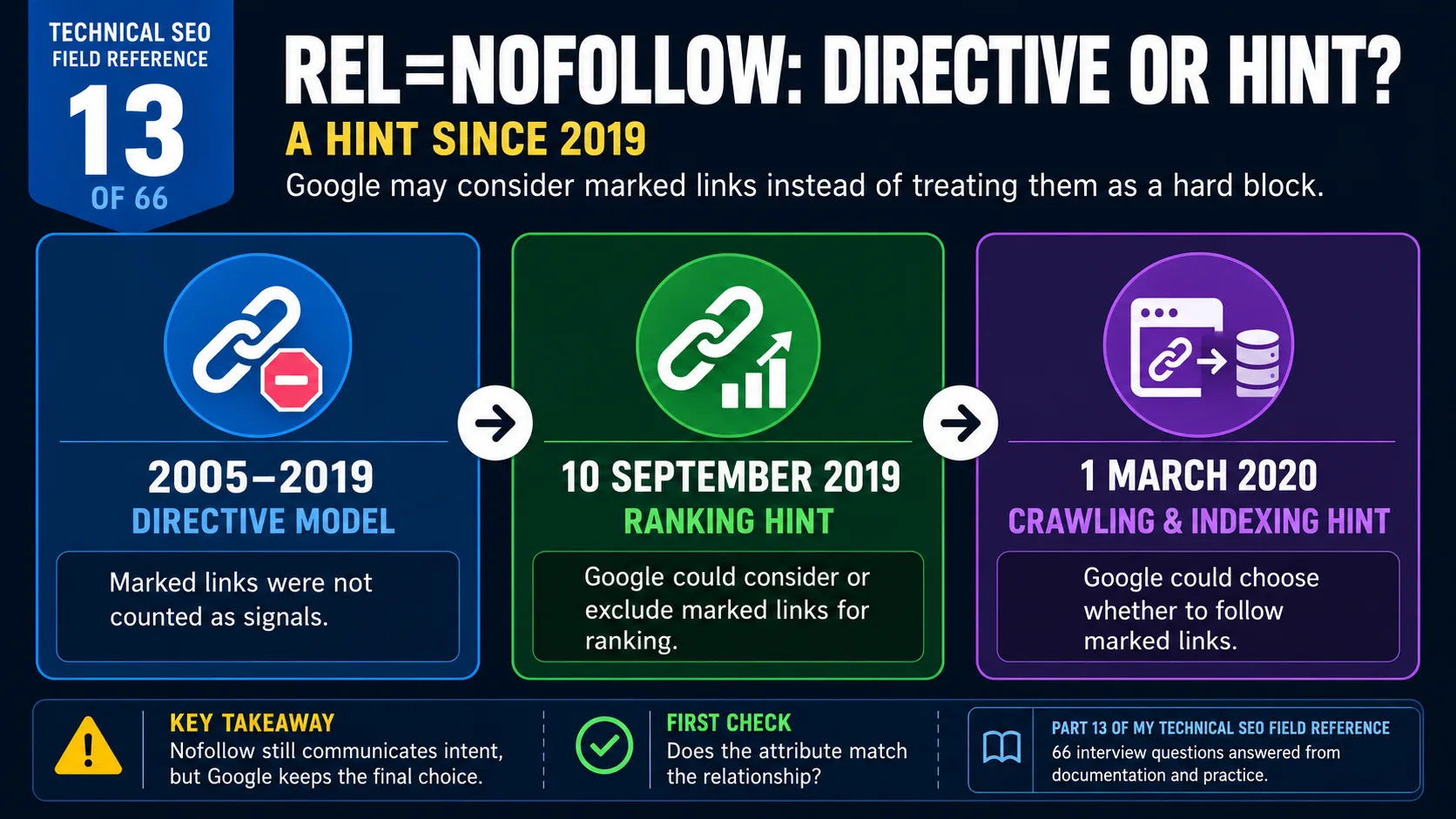
Nofollow Hint or Directive: What Changed in 2019
Read more →: Nofollow Hint or Directive: What Changed in 2019Nofollow is a nofollow hint, not a directive. Google changed it from directive to hint for ranking in September 2019 and for crawling and indexing in March 2020.
-
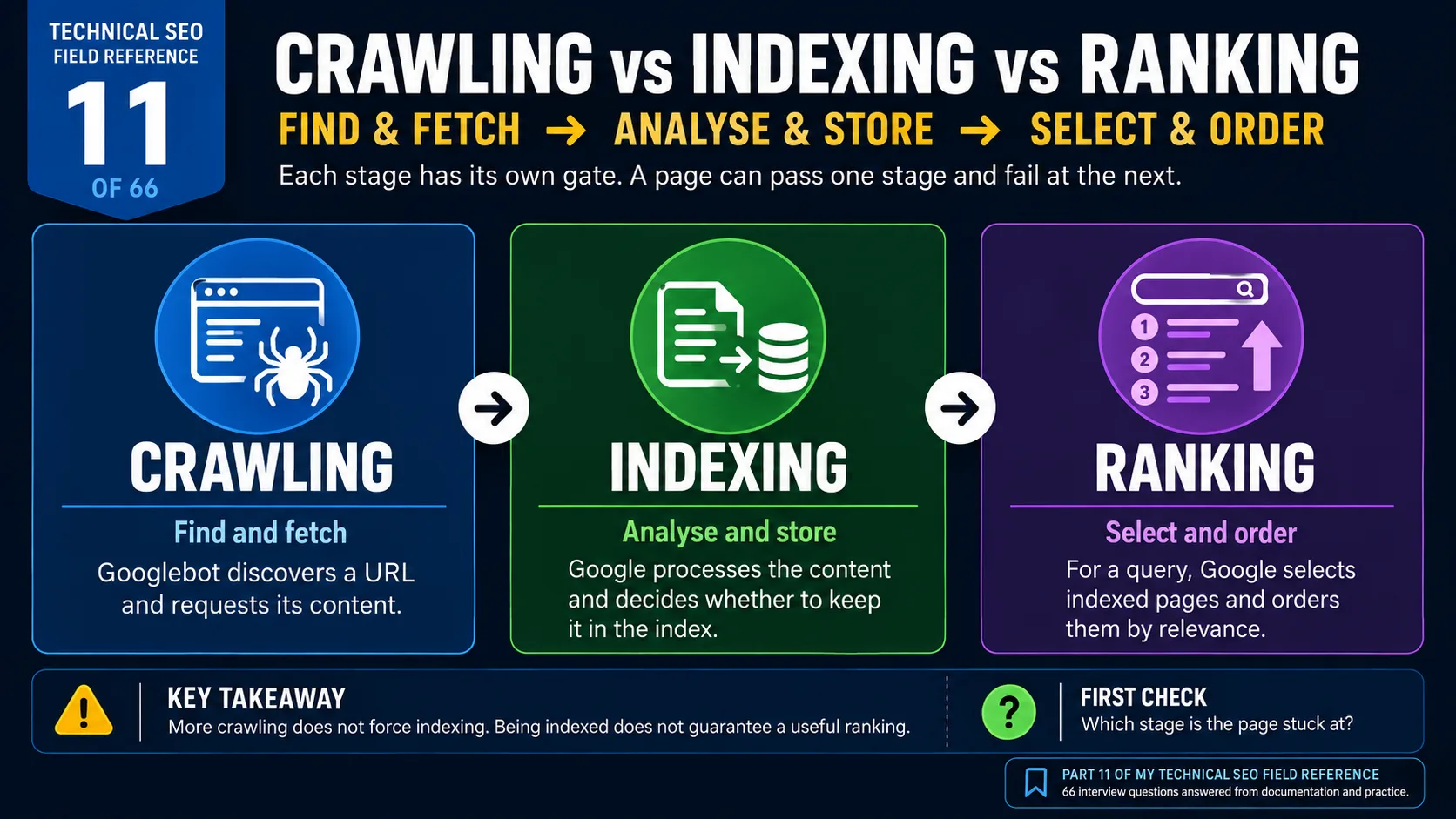
Crawling Indexing Ranking: What Is the Difference?
Read more →: Crawling Indexing Ranking: What Is the Difference?Crawling finds and fetches. Indexing analyses and stores. Ranking selects and orders. Each stage has its own gate, its own failure conditions and its own fix.
-
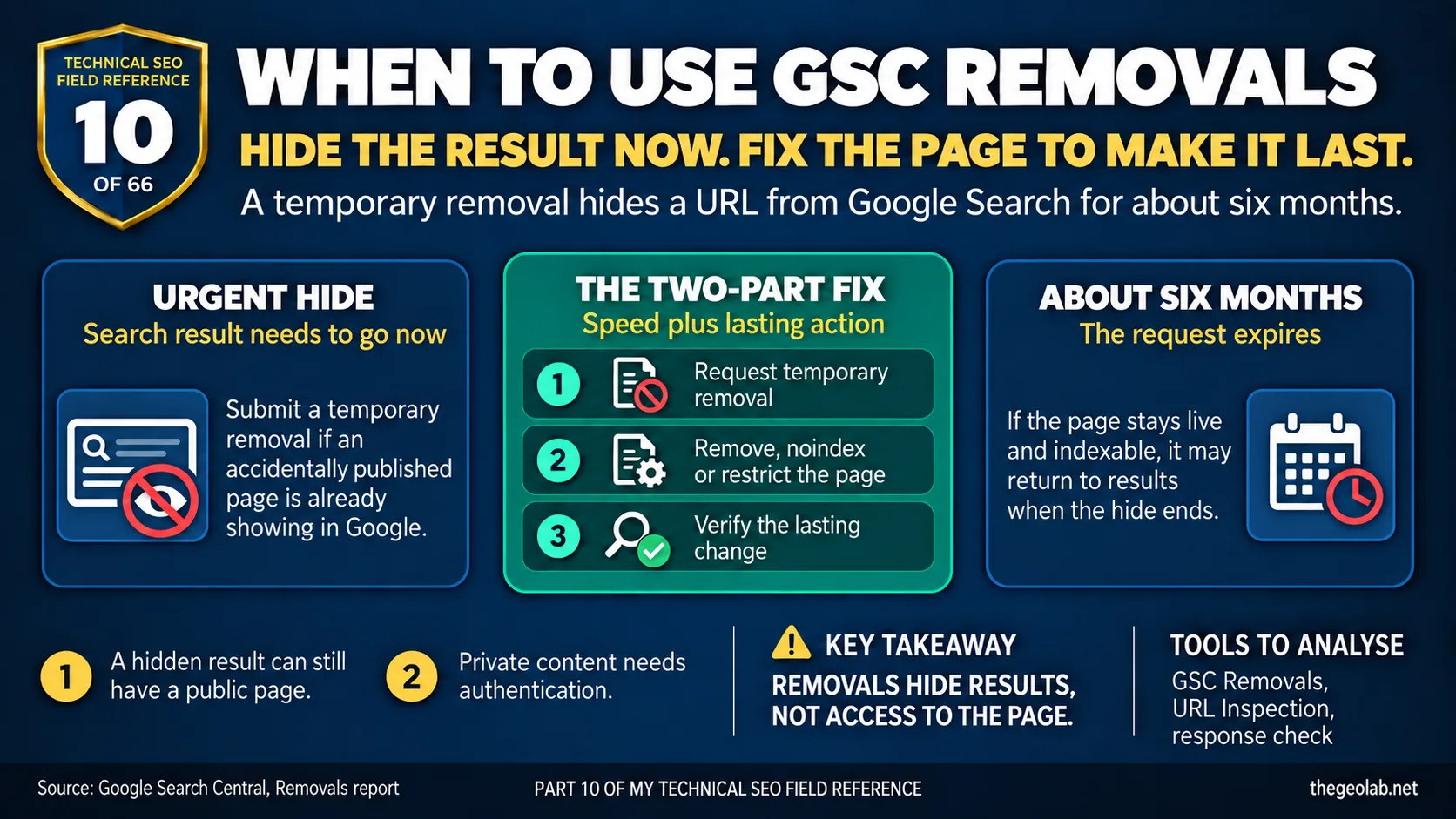
When should you use Google Search Console’s URL Removal tool?
Read more →: When should you use Google Search Console’s URL Removal tool?The Search Console Removals tool hides a URL for about six months. Use it when speed matters, then make the lasting change. Here is when to use it and when…
-
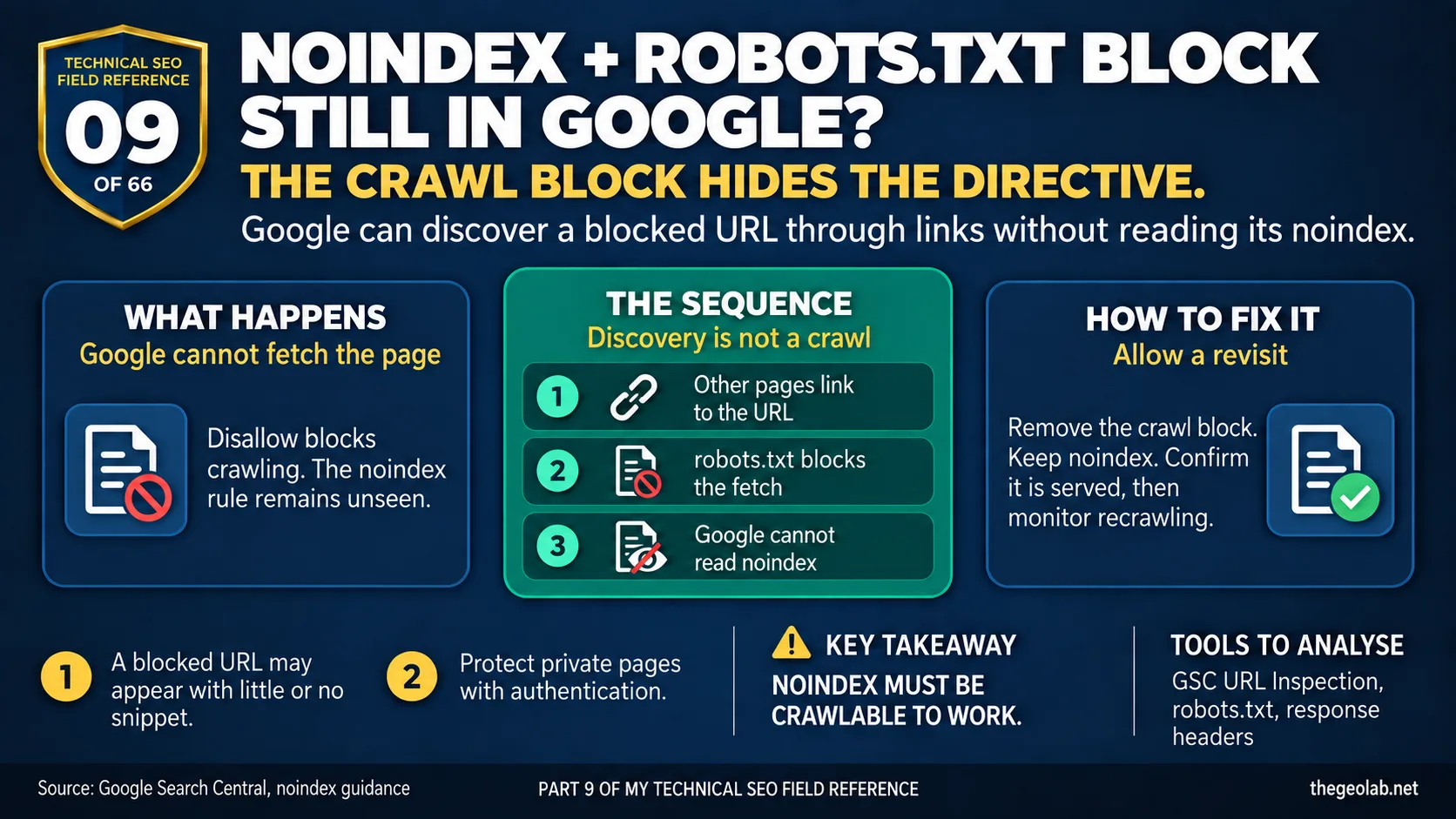
A URL is noindex and blocked by robots.txt but still appears in Google. Why?
Read more →: A URL is noindex and blocked by robots.txt but still appears in Google. Why?A URL blocked by robots.txt can stay indexed because Google never sees the noindex. Remove the crawl block, keep the directive, and let Google revisit.
-
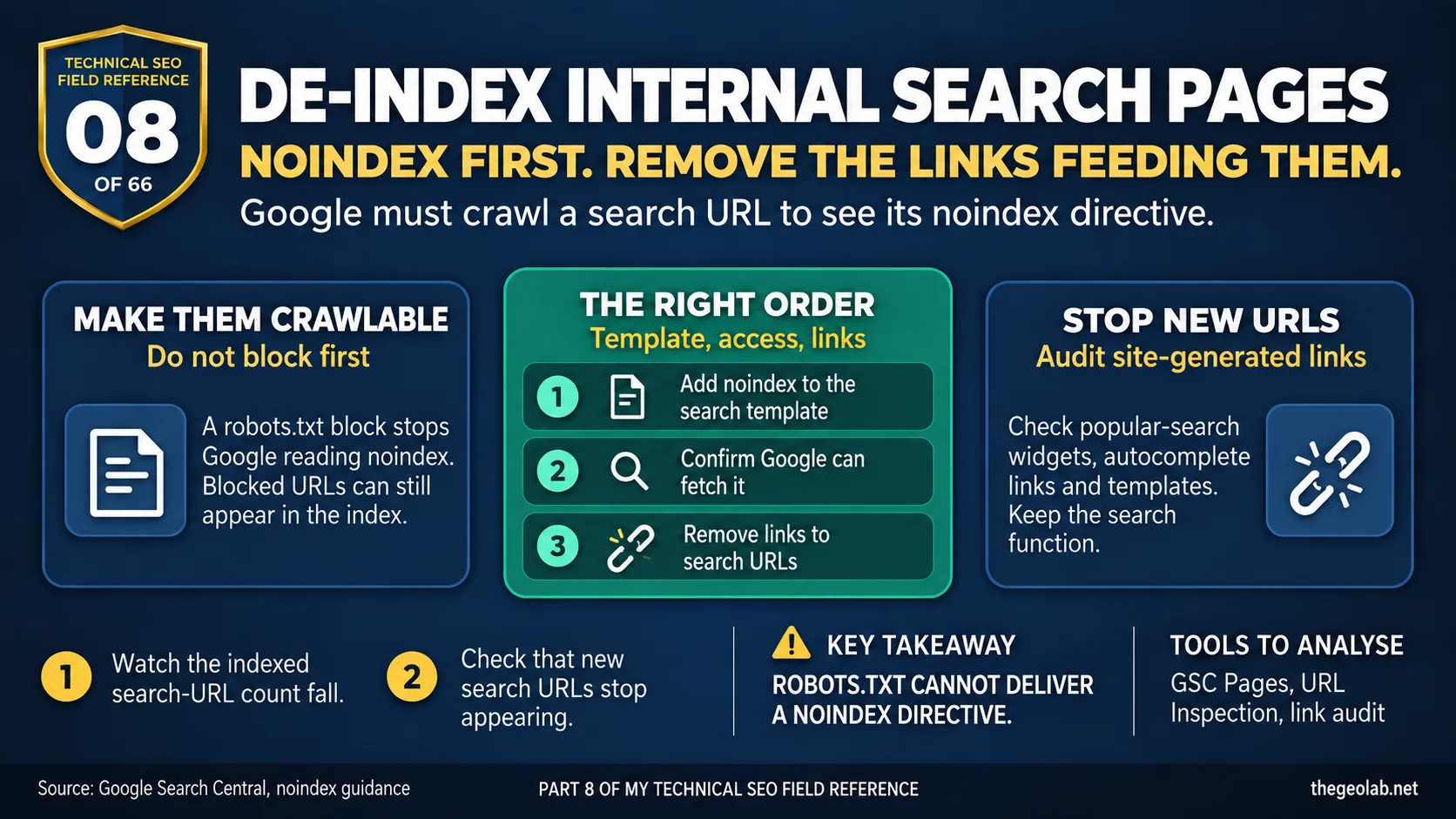
How would you de-index internal search-result pages and prevent them returning?
Read more →: How would you de-index internal search-result pages and prevent them returning?How to deindex internal search pages: noindex the template, keep it crawlable so Google sees the directive, then cut the internal links that keep regenerating them.
-
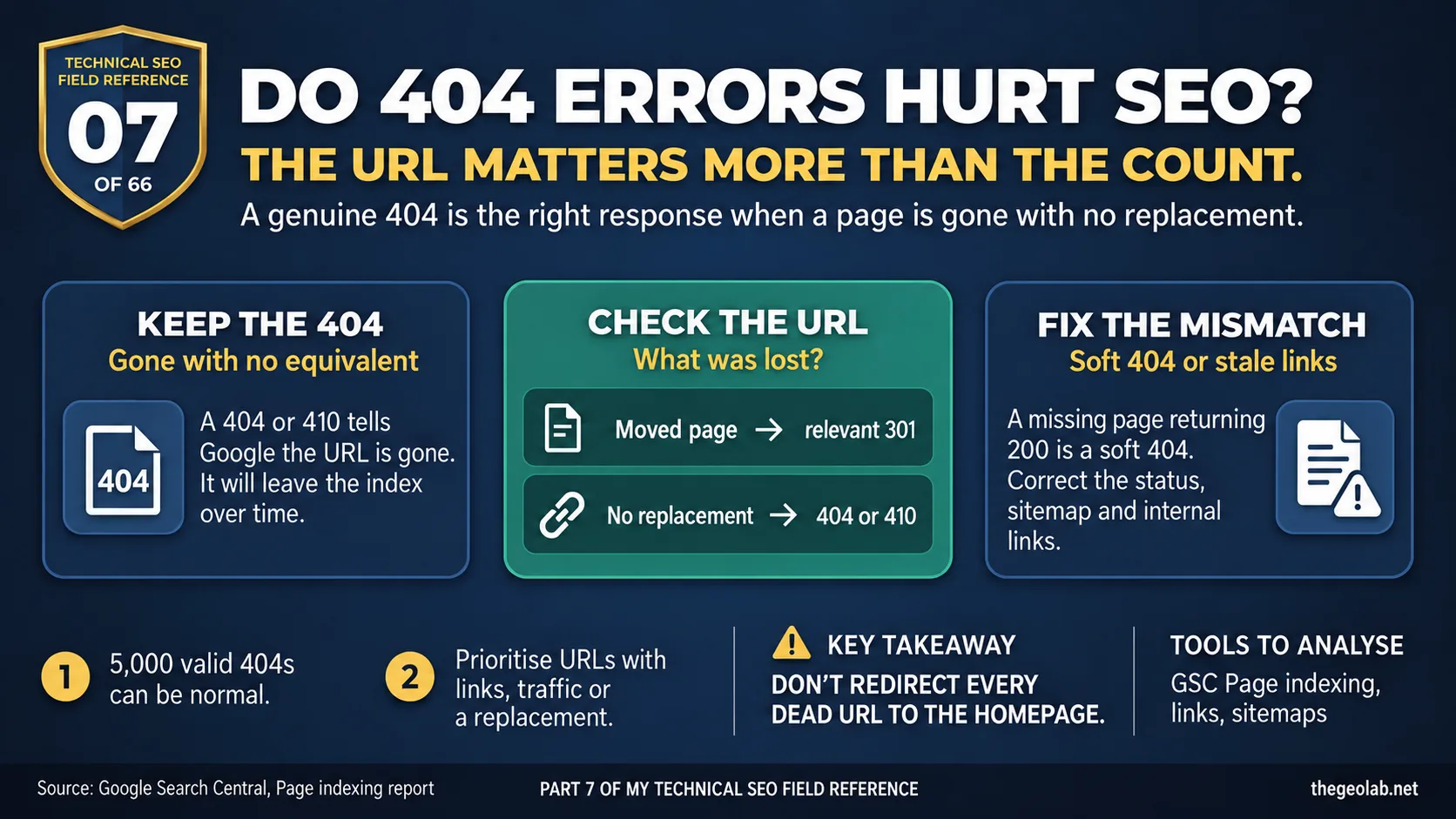
Google says 404s do not necessarily hurt SEO. Why?
Read more →: Google says 404s do not necessarily hurt SEO. Why?Google says 404 errors do not necessarily hurt SEO. Here is why a 404 is often the correct response, and the cases where it genuinely costs you.
-
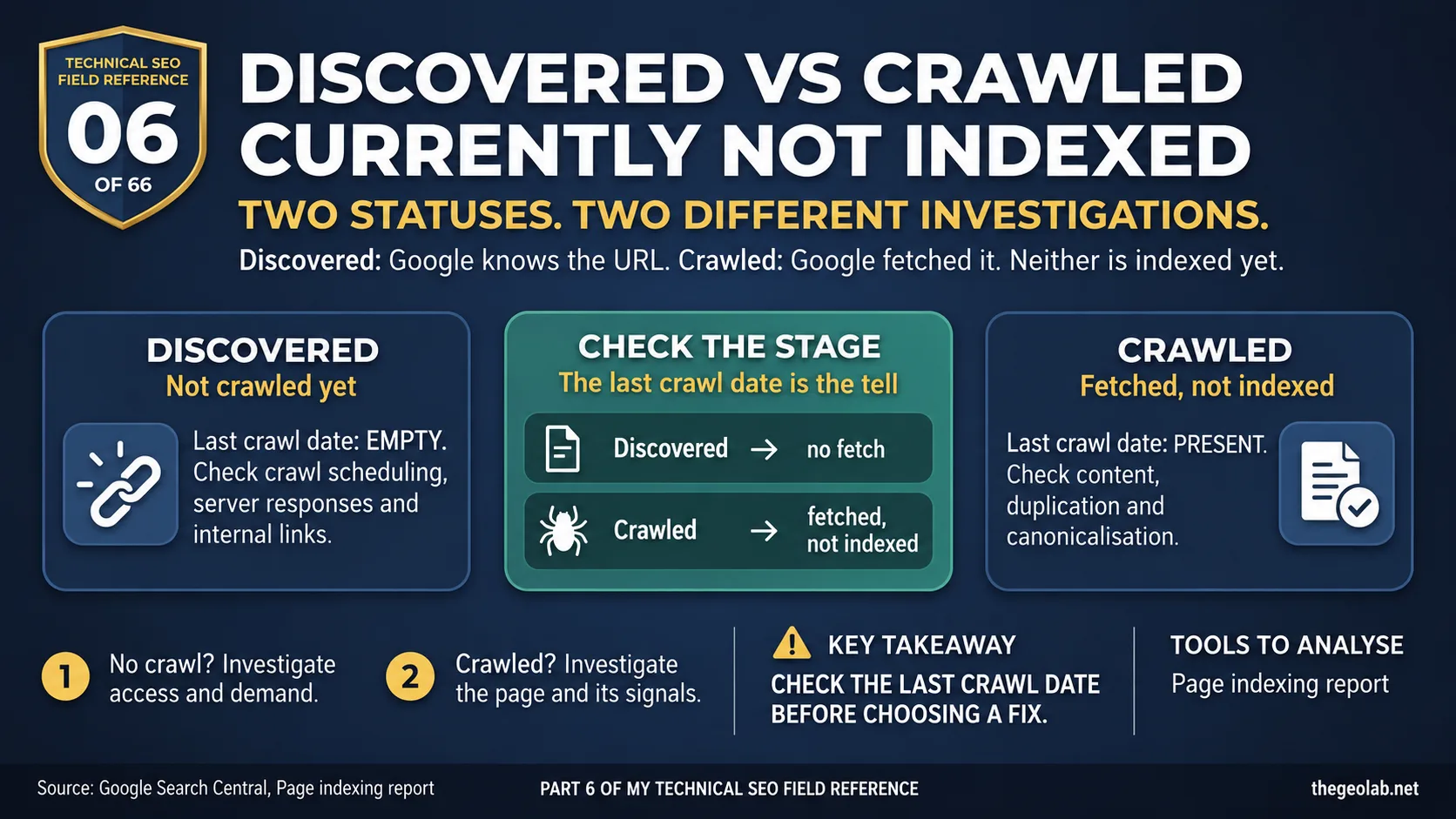
What is the difference between “Discovered – currently not indexed” and “Crawled – currently not indexed”?
Read more →: What is the difference between “Discovered – currently not indexed” and “Crawled – currently not indexed”?Discovered – currently not indexed means Google has not crawled the URL yet. Crawled means it has. Same report, opposite stages, different fixes.
-
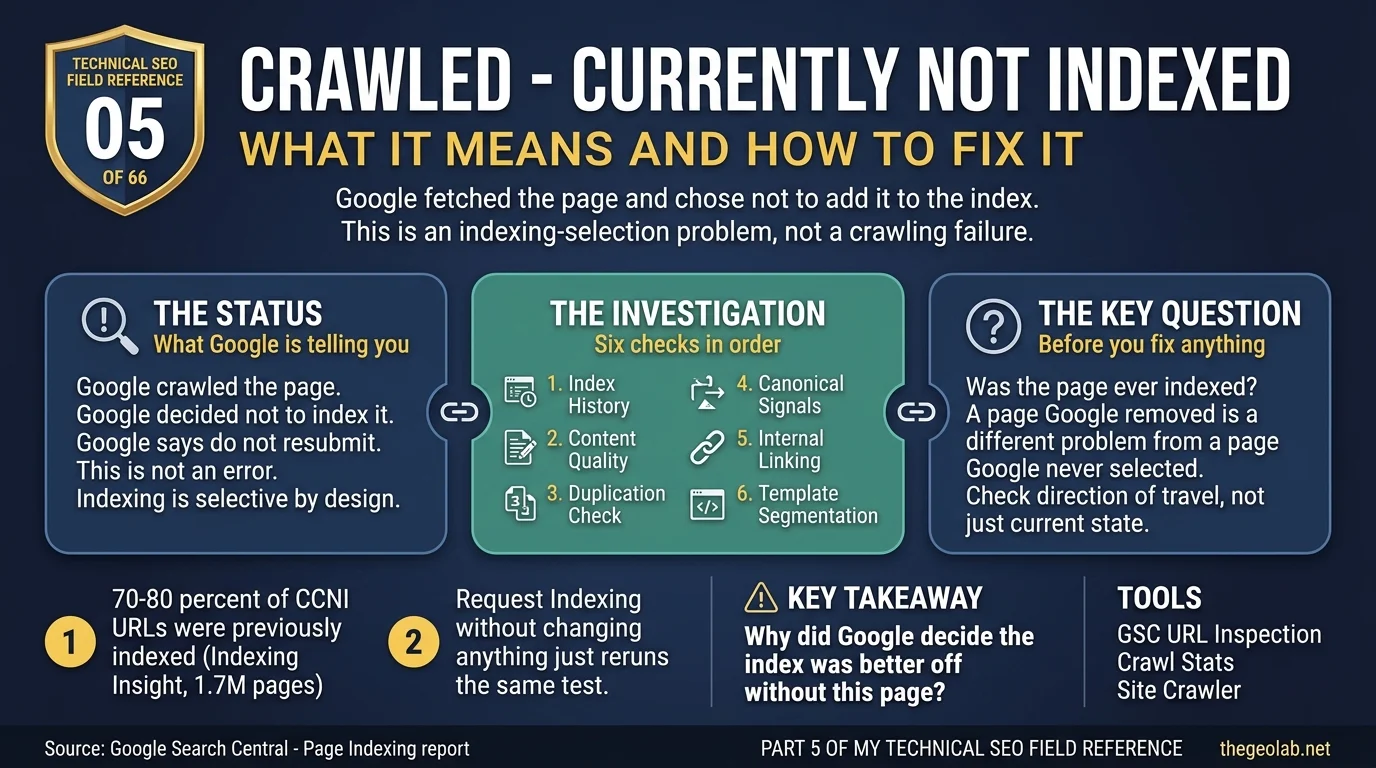
Crawled – Currently Not Indexed: What It Means and How to Fix It
Read more →: Crawled – Currently Not Indexed: What It Means and How to Fix ItCrawled – Currently Not Indexed: What It Means and How to Fix It By Artur Ferreira · The GEO Lab Technical SEO Field Reference, Question 05 of 66. The interview…